Reading these super helpful articles about how boolean logic works, I was able to breadboard a full adder. Here’s a video of me (of my attempt at) explaining how this lil doodad works:
Adder diagram found here.
Reading these super helpful articles about how boolean logic works, I was able to breadboard a full adder. Here’s a video of me (of my attempt at) explaining how this lil doodad works:
Adder diagram found here.
So, since I put the e-cig attachment project on hold, I’ve been itching to get into some physical building stuffs. My initial electronics class only covered resistors and batteries. It focused on calculating voltage, resistance, and amps. Obviously, that was very useful stuff but there’s not a lot to build with just a battery and some resistors.
I’m not sure what hands-on projects make sense to move in to with my limited electronic knowledge. After some reading, I’ve decided to focus on building my own digital clock with a twist. Inspired by the old cuckoo clocks and pop-up books, I want to build a clock that animates with pop-ups as time passes.
Unlike my e-cig attachment project, information about how to build a digital clock and the parts necessary are readily available. Because of this, I super recommend this as a beginners electronics project. I’ve been reading great info written by Marshall Brian (Thanks dude!) about boolean logic and logic gates which works up to TTL chips and building a digital clock.
How Boolean Logic Works by Marshall Brian
http://computer.howstuffworks.com/boolean.htm
How Electronic Gates Work by Marshall Brian
http://electronics.howstuffworks.com/digital-electronics.htm
How Digital Clocks Work by Marshall Brian
http://electronics.howstuffworks.com/gadgets/clocks-watches/digital-clock3.htm
The pop-up part of my idea is inspired by Peter Dahmen‘s pop-up designs and kirigami.
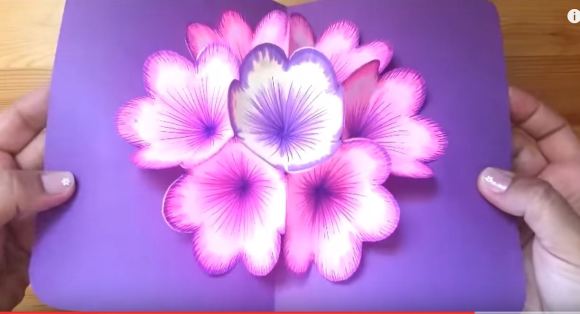
https://www.youtube.com/watch?v=870JPSsUmc0
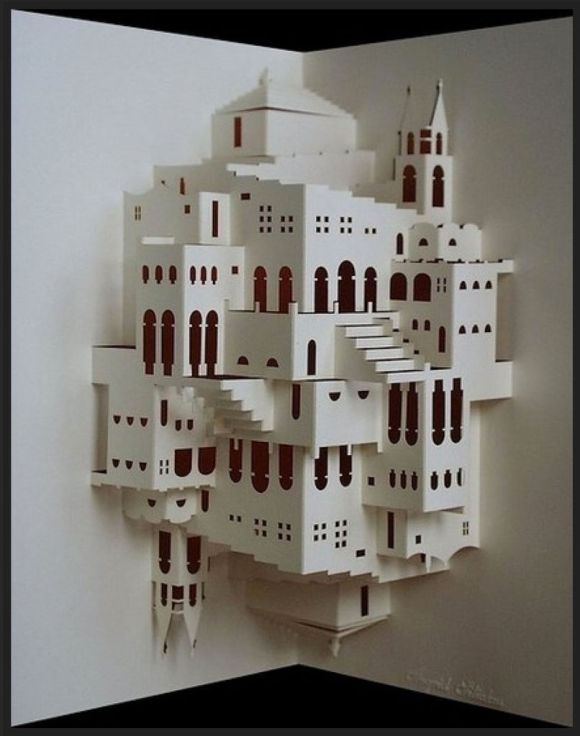 http://wonderfulrife.blogspot.com/2015/08/the-art-of-kirigami.html
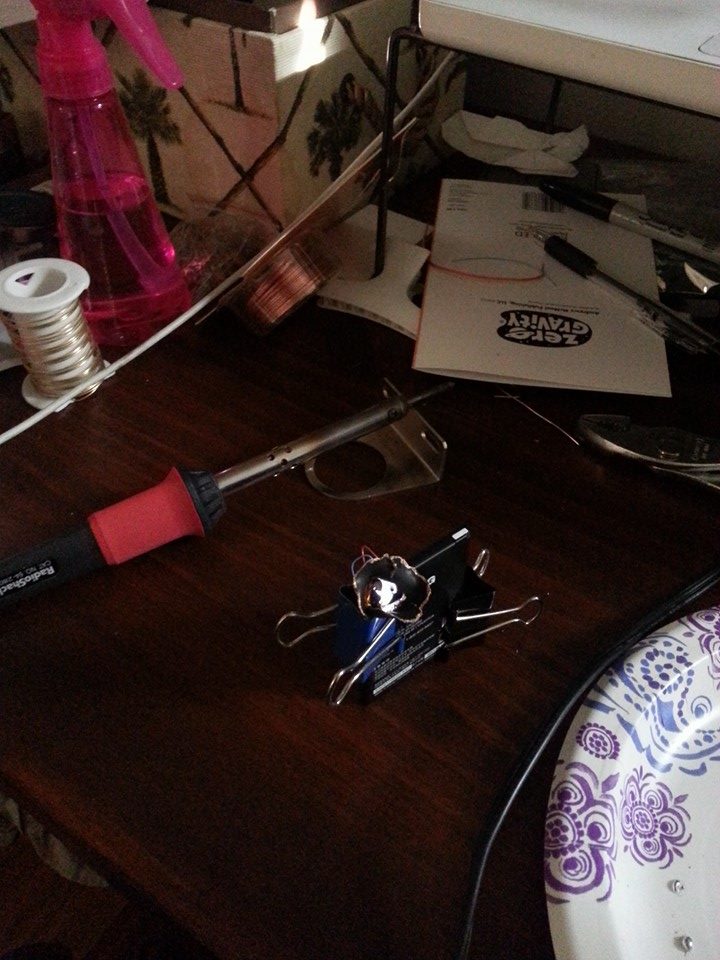
So, I made a prototype flower. The ecig will have a bouquet of flowers that attach to the end and sway up the sides of the ecigarette.

Each time a user takes a drag of the ecig, the LEDs in the flowers will illuminate, just like the tip of ecigarettes already do.
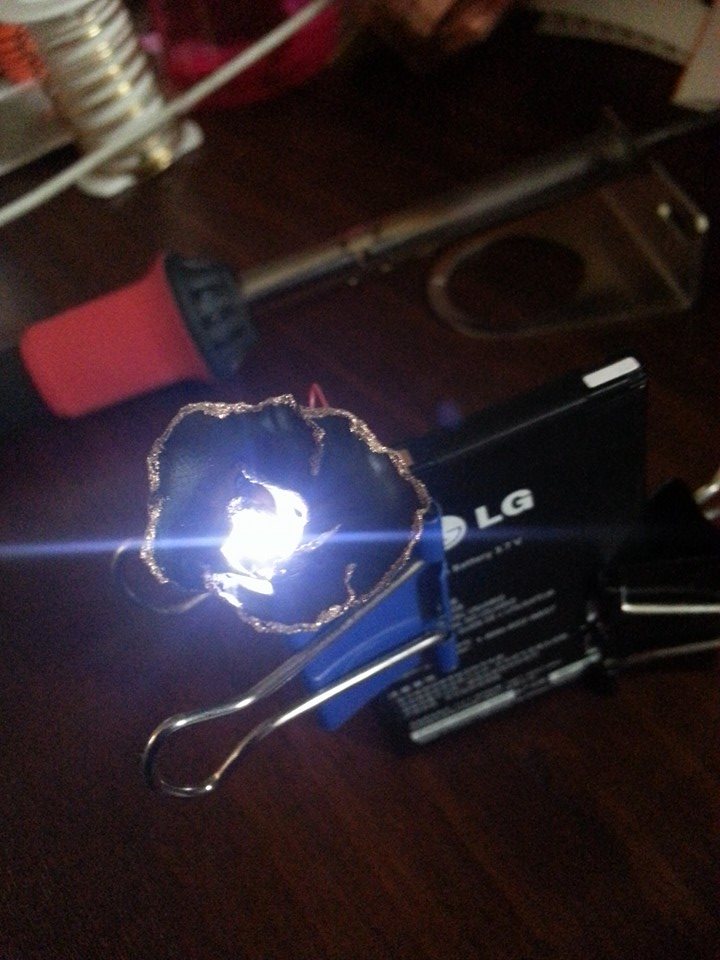
Using Super Sculpey, I molded the flower. I painted it black and gold simply because they were the easiest colors to reach from my art supplies.
It’s just a prototype with some improvements to be made, but I think it’s looking pretty sweet so far.

That’s my set up to solder the tinest LEDs, much smaller than a grain of rice. Needle nose tweezers and a few clips. I mounted everything over a paper plate so that if I dropped the LED it would be easy to find.

I killed about 3 LEDs before I finally got one. One of the problems was keeping my hand from shaking any time I got close. I had to make sure I had many anchor points for my elbows, wrists and floating fingers.
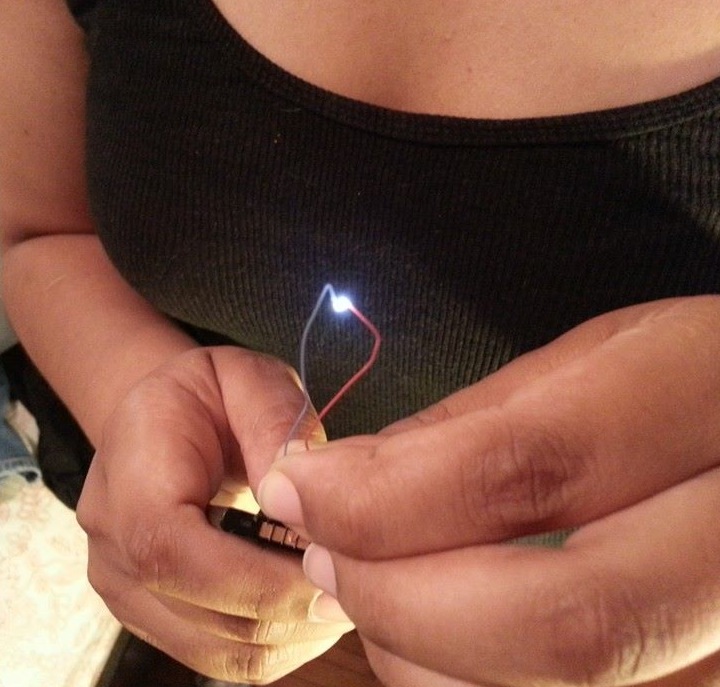
Here it is! Testing it out with an old cell phone 3.7V battery. There are a few tutorials on youtube about soldering tiny components. I recommend checking them out and preparing to burn out or ruin a few pieces before you finally get the hang of it.

 vanitronic